
Nitrate Nutritional Fitness
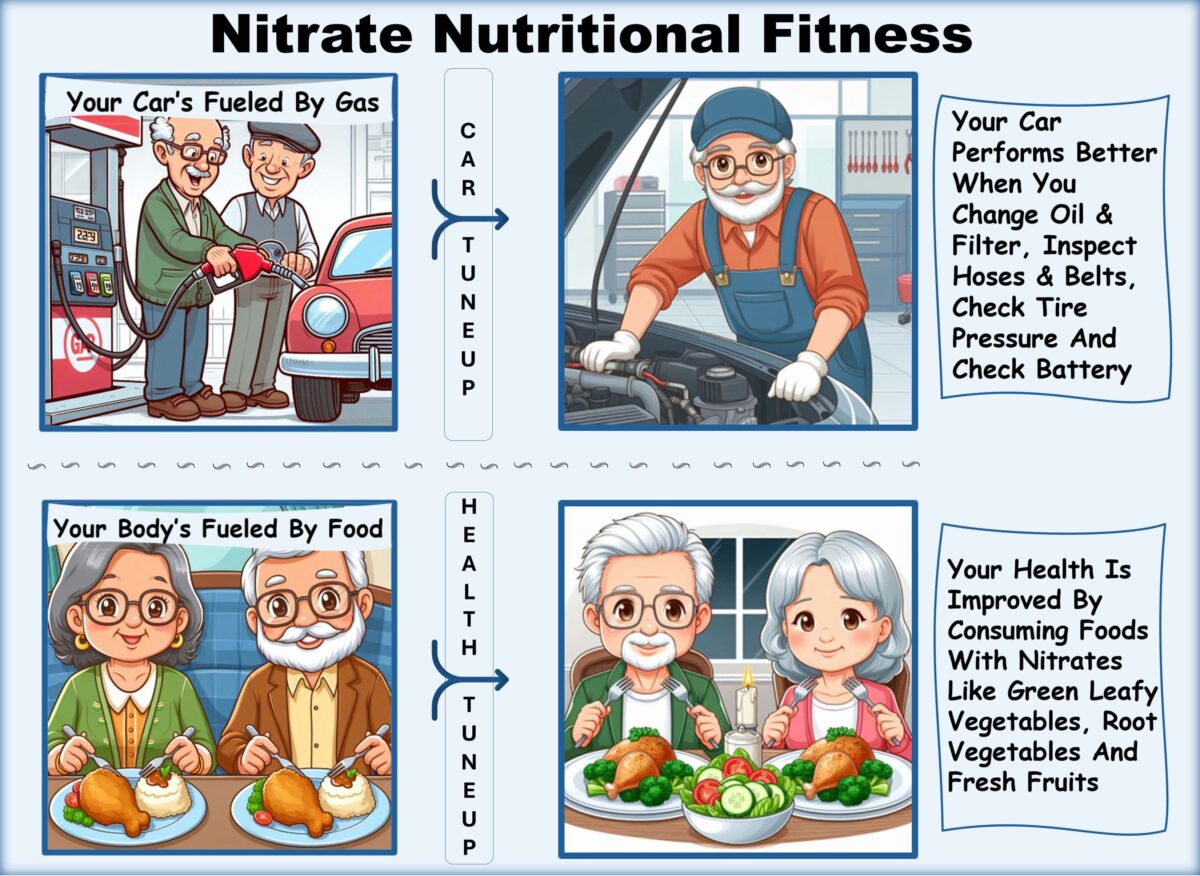
Food supplies more than just energy to move and keep warm. It supplies vitamins, minerals and bioactive compounds.
The concept of “Nitrate Nutritional Fitness” is using nitrate-rich foods and supplements that protect against acute respiratory viral infection and support cardiovascular, neurological, and metabolic function.
Clinical Care Physicians do not have any laboratory tests to measure nitrates during routine clinical examinations. They assess health through indirect means, such as measuring blood pressure and levels of glucose, cholesterol and electrolyte in blood. But the importance of nitrates in overall health is not evaluated.
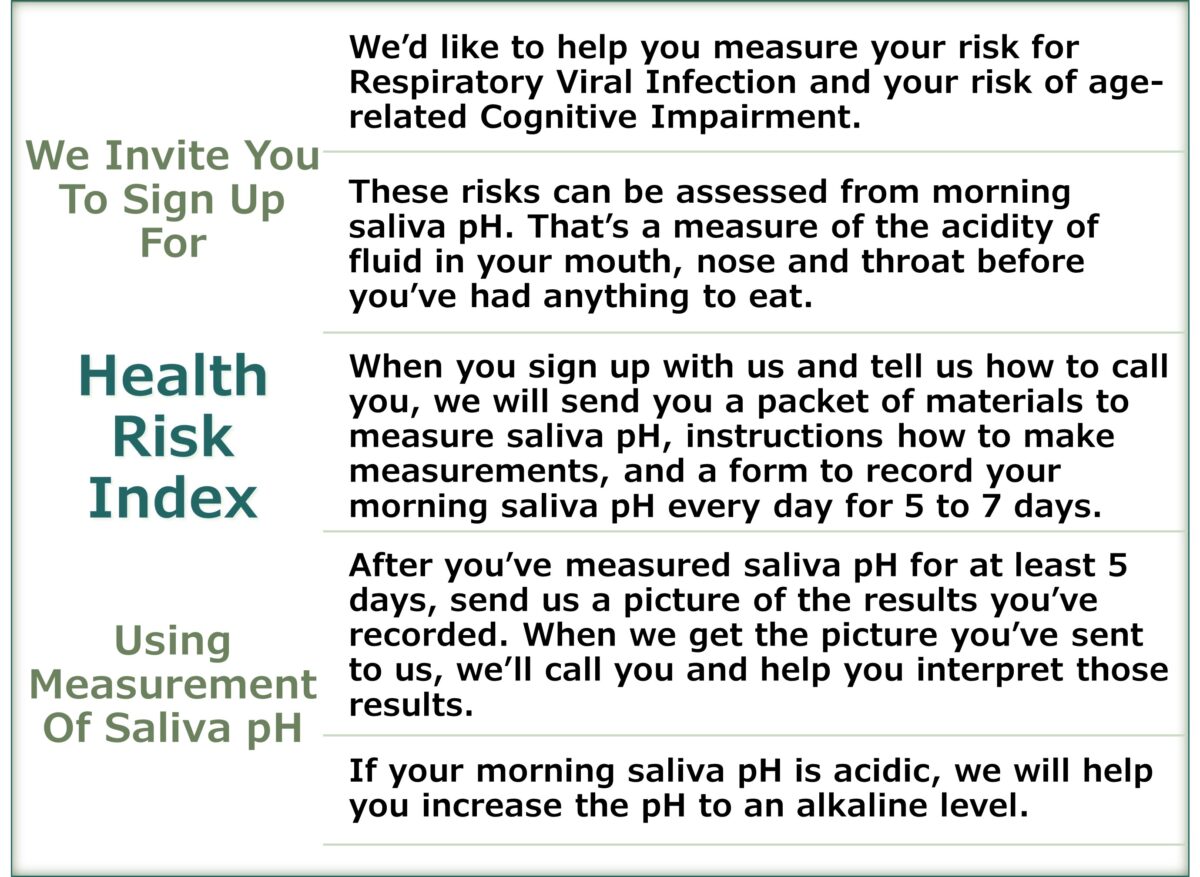
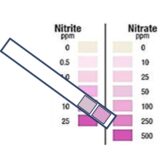 Nitrates sufficient to provide protection against acute infections and chronic illness can be measured in saliva. Tests for nitrates require samples of saliva collected first thing in the morning. Plastic testing strips are dipped into saliva samples right away. The plastic strips are coated with chemicals that change color in proportion to the concentration of nitrates in solution.
Food Sources: (1) Nitrates are abundant in green leafy vegetables (like spinach and lettuce), root vegetables (such as beets), and other plant-based foods. When consumed, these dietary nitrates are absorbed into the bloodstream and contribute to the body’s nitrate pool.
Nitrates are particularly important for normal cell function. Transported into cells, they are reduced into nitrites and then into Nitric Oxide (NO). This conversion is crucial for vasodilation, immune response, and neurotransmission. (2)
Fresh meats and fish contain very few nitrates. However, ham, bacon, pastrami, sausages, hot dogs and luncheon meats often have nitrates added to preserve them. A process which forms compounds that may risk causing cancer. (1)
Local Production: (2) Nitrates can also be produced within the body. NO is synthesized from the amino acid L-arginine. Right where and when it’s needed to control local chemical reactions. Then it can be further oxidized to form nitrite and then nitrate.
Circulation of Nitrate:
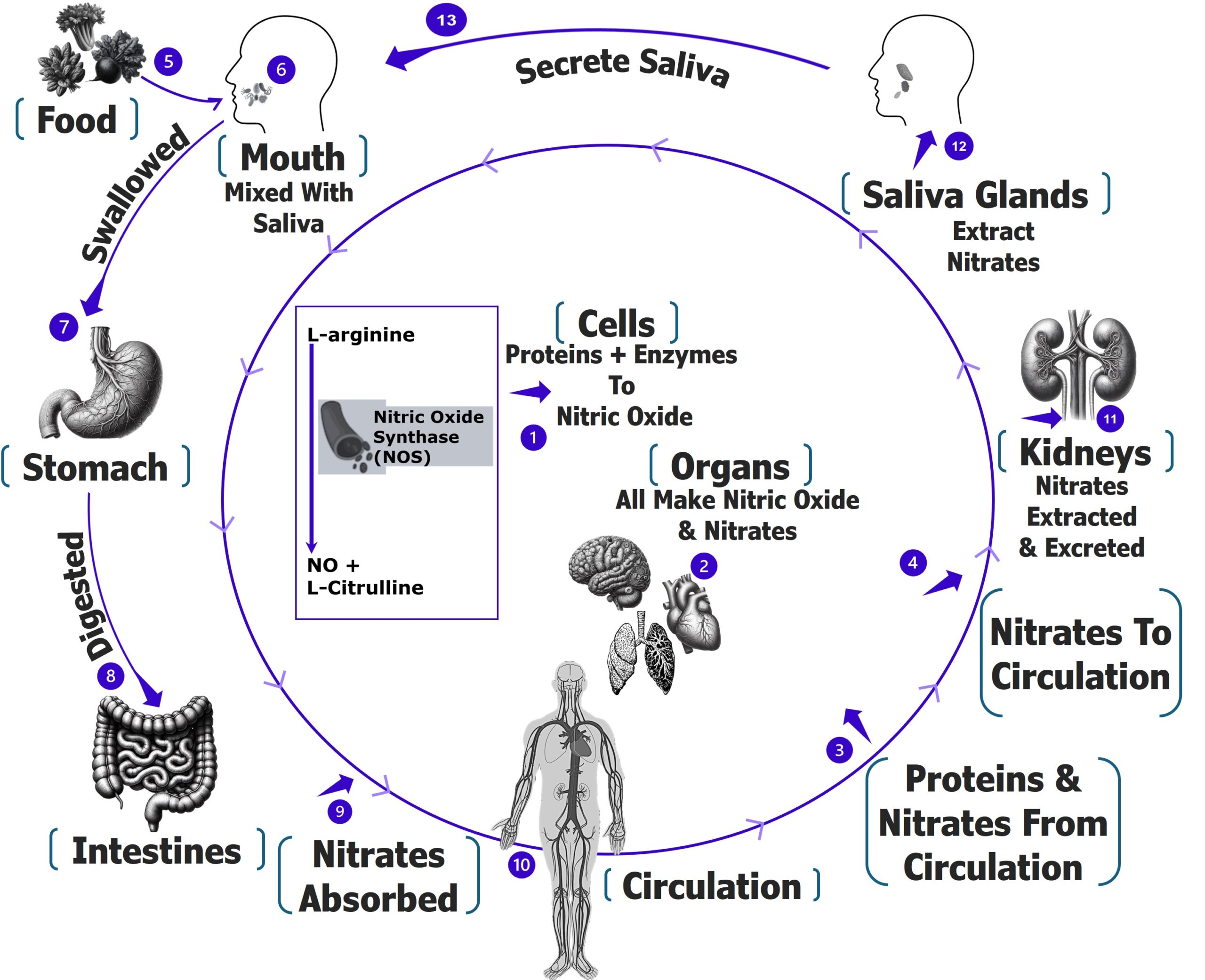
Reversible Pathway: (3) The nitrate-nitrite-NO pathway to chemical reactions works both ways. Keeping Nitric Oxide (NO) freely available for rapid reactions. NO not immediately used is converted to nitrite. Then back to longer term reserves of nitrate for general circulation.
Nitrate Stability
Initial Hours: After ingestion, nitrate levels in the blood rise and remain relatively stable for several hours.
Half-Life: Over the course of 5 to 8 hours, the nitrate concentration decreases by half.
Extended Duration: Depending on the initial concentration and individual metabolic rates, nitrate can remain detectable in the blood for up to a day or more, gradually reducing in concentration.
This stability allows nitrate to serve as a reservoir for the production of nitrite and NO, supporting various physiological functions over an extended period. From there, nitrates can be transported to various tissues. Including salivary glands.
Nitrates in the Bloodstream (4)
Nitrate itself is relatively inert, but it can be a precursor for the generation of nitrite molecules which are bioactive. Nitrite, in turn, can be reduced to NO, a potent vasodilator, in tissues like endothelium, muscles, and other organs.
This process is especially important as a backup for NO production when the typical enzyme-driven mechanisms are less active.
Because nitrate is converted to nitrite and NO over time, it supports a longer-term regulation of vascular health, oxygen delivery, and overall tissue function. Unlike NO, which is highly transient and quickly degraded, nitrite can act as a reservoir that slowly releases NO when needed.
This important reservoir contributes to the body’s NO pool over time. This helps maintain various physiological processes like vascular tone, blood pressure regulation, and oxygen delivery, especially under conditions of stress or increased demand.
Anti-acid Oral Bacteria (5)
Saliva is mostly water with some proteins, electrolytes, and other chemicals like cholesterol and uric acid. Nitrates converted to nitrites promote the growth of bacteria.
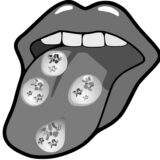 An important part of saliva is millions of bacteria in every drop. Good bacteria are absolutely essential for strong teeth. They feed on proteins from the salivary glands as well as sugars, fats and fiber from food that’s eaten. These bacteria grow and produce substances that have much greater effect than what’s secreted by salivary glands alone.
Acid-base balance in the mouth, nose and throat is determined by actions of good bacteria growing in acinar cells and saliva. These alkalizing bacteria are essential for good nutrition and healthy teeth. Acidifying bacteria destroy the enamel of teeth and ulcerate soft tissue.
Alkalizing bacteria, supported by nitrites and NO, can outcompete acid-forming bacteria for resources and lessen their ability to produce acid. Especially when sugar and starch are decreased, alkalizing bacteria increase in growth and function. The result of nitrate transport into salivary glands is production of alkaline saliva. (6)
Functions of Nitric Oxide (NO) as a Messenger Molecule: (7)
 Vasodilation: NO signals the smooth muscles in blood vessels to relax, leading to vasodilation and improved blood flow.
 Neurotransmission: In the nervous system, NO acts as a neurotransmitter, helping to regulate functions such as memory and learning.
 Immune Response: NO is involved in the immune response, where it helps to kill pathogens and regulate inflammation.
 Muscle Contraction: NO influences muscle contraction and relaxation, playing a role in muscle function and recovery. As a messenger molecule, NO coordinates complex biological processes, ensuring that cells and tissues respond appropriately to stimuli.
 Improved Exercise Performance: Nitrates are believed to improve endurance and athletic performance by making exercise less taxing. Nitrates help reduce the amount of oxygen needed by muscles. Individuals can perform at higher intensities for longer periods.
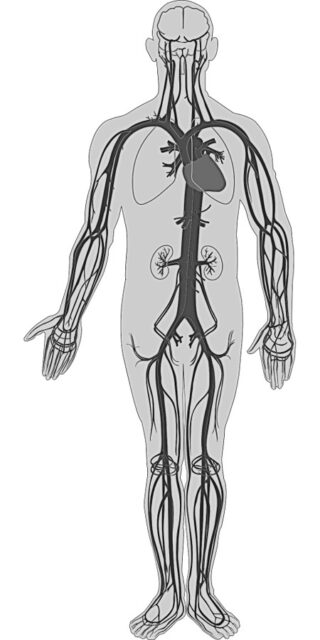 Enhanced Blood Flow and Cardiovascular Health: By increasing NO levels, nitrates contribute to vasodilation (the widening of blood vessels), which can lower blood pressure and improve overall circulation. This is especially beneficial during exercise when muscles demand more oxygen and nutrients.
Food Sources vs. Supplementation (8)
Nitrate-rich foods like beets, leafy greens, and celery are excellent natural sources that can support this fitness approach. Some athletes and fitness enthusiasts may also choose nitrate supplements, such as concentrated beetroot juice or powders, which provide a more potent dose. Both options have been shown to support improved athletic performance and cardiovascular health, though food-based sources also deliver additional nutrients like fiber and antioxidants.
Benefits Beyond Fitness
Regular consumption of nitrates may contribute to long-term heart health, support cognitive function, and help maintain blood pressure within a healthy range. This makes nitrate nutrition a valuable aspect of general wellness, beyond just performance enhancement.
Scientific Support
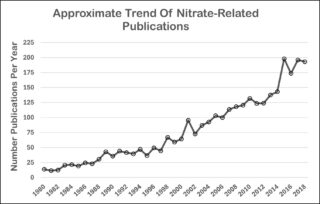 Interest in Nitric Oxide really started to heat up after the 1980’s. Numerous studies have shown positive effects of dietary nitrates on athletic performance and cardiovascular health. However, the effects can vary by individual, and optimal dosing has yet to be universally defined.
The idea of “Nitrate Nutritional Fitness” encourages incorporating nitrates into the diet strategically to support both immediate fitness goals and long-term health benefits. Like any nutrition plan, it should be balanced with other healthy practices and consulted with a healthcare provider if supplemented heavily.
What Would You Like To Do?
_____________________________________________________________________________________________________
- VanThomme G. What to know about foods with nitrates and nitrites. MD Anderson Cancer Center 2024 Jan 16
https://www.mdanderson.org/cancerwise/what-to-know-about-foods-with-nitrates-and-nitrites.h00-159694389.html
——- - Ma L, Hu L, et. al. Nitrate and nitrite in health and disease. Aging and disease. 2018 Oct;9(5):938
https://doi.org/10.14336/AD.2017.1207
——
3. Rocha BS. The nitrate-nitrite-nitric oxide pathway on healthy ageing: A review of pre-clinical and clinical data on the impact of dietary nitrate in the elderly. Frontiers in aging. 2021 Nov 17;2:778467
https://doi.org/10.3389/fragi.2021.778467
——
4. Piknova B, Schechter AN, et. al. Skeletal muscle nitrate as a regulator of systemic nitric oxide homeostasis. Exercise and sport sciences reviews. 2022 Jan 1;50(1):2-13 https://doi.org/10.1249/JES.0000000000000272
——
5. Koch CD, Gladwin MT, et. al. Enterosalivary nitrate metabolism and the microbiome: intersection of microbial metabolism, nitric oxide and diet in cardiac and pulmonary vascular health. Free Radical Biology and Medicine. 2017 Apr 1;105:48-67
https://doi.org/10.1016/j.freeradbiomed.2016.12.015 Full Article: https://pmc.ncbi.nlm.nih.gov/articles/PMC5401802/
——
6. Rosier BT, Buetas E, et. al. Nitrate as a potential prebiotic for the oral microbiome. Scientific reports. 2020 Jul 30;10(1):12895
https://doi.org/10.1038/s41598-020-69931-x
—–
7. Förstermann U, Sessa WC. Nitric oxide synthases: regulation and function. European heart journal. 2012 Apr 1;33(7):829-37
https://pmc.ncbi.nlm.nih.gov/articles/PMC3345
—–
8.VanDeWalle G. 5 Ways Nitric Oxide Supplements Boost Your Health And Performance. Healthline 2023 Feb 28
https://www.healthline.com/nutrition/nitric-oxide-supplements